


Choosing a paper bag by width alone can cause tight loading, crushed food, or wasted space. We prevent this by matching the bag format to the packed product.
Buyers should choose a flat greaseproof paper bag for thin, uniform items and a gusseted bag for thicker or irregular orders. The choice depends on product depth, portion variation, loading, closure, and artwork. Approve the format with real filled samples before bulk production.
As a packaging manufacturer, we help buyers turn a menu and packing workflow into clear dimensions. The comparison below shows what to measure, test, and record in the purchase specification.
When Is a Flat Greaseproof Paper Bag the Better Choice?
A flat bag looks simple and economical, but it becomes frustrating when the product is thicker than expected. Buyers should confirm depth before approving the format.
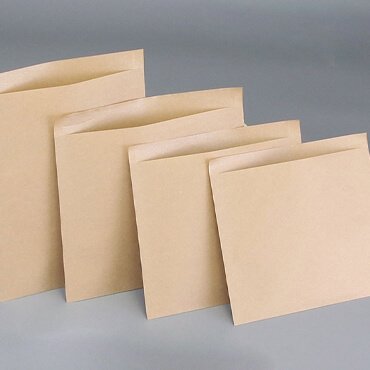
A flat greaseproof paper bag is usually the better starting format for thin, consistent products that slide into a two-dimensional pocket. It supports simple loading and a clean front panel, but it should not be forced to hold bulky or highly variable portions.
We match the pocket to the real product
We treat a flat bag as a pocket with usable width and height, not as a box. That distinction matters. A flat sandwich, pastry, cookie, or similar item may fit neatly when its thickness is limited. A buyer should still measure the product at its widest and thickest points, including toppings, folds, or wrapping paper. The bag also needs practical loading clearance. If staff must push the item into the opening, the nominal size is not truly usable.
Flat bags can also suit operations that need quick counting, compact storage, and a consistent presentation. Their front and back panels provide straightforward artwork areas. However, the product takes up part of those panels when the bag opens, so the buyer should review the printed design on a filled sample rather than on a flat artwork file alone.
| Buyer condition | Flat bag fit | What we recommend checking |
|---|---|---|
| Product is thin and uniform | Strong candidate | Filled width, height, and loading clearance |
| Portion thickness varies | Higher fit risk | Largest normal portion, not the average portion |
| Staff load at a fast counter | Possible if the mouth opens easily | Timed packing trial with normal gloves or tools |
| Front graphics must stay flat | Often favorable | Distortion on the filled sample |
| Product is bulky or stacked | Usually a weak fit | Compare with a side-gusset sample |
We advise buyers to test the largest normal product configuration. An undersized flat bag may bow, wrinkle, or resist loading even when the listed width and height appear adequate.
When Does a Side Gusset Improve the Bag?
Buyers sometimes add a gusset automatically for capacity. An unnecessary gusset can add complexity, while a shallow one may still fail to fit the order.
A side gusset improves a greaseproof paper bag when the packed product needs depth or when portions vary. The folds expand to create volume, but buyers must specify how the bag should open, stand, close, and present artwork after filling.
We use depth where the product needs it
A side gusset lets the bag open into a three-dimensional shape. This can make loading easier for stacked pastries, thicker sandwiches, several small items, or irregular portions. The gusset does not create unlimited capacity. The product still needs enough front width, bag height, and opening clearance. A buyer should therefore give us all three finished dimensions and show which number represents the gusset.
The fold geometry also changes the printed result. Artwork placed near a gusset crease may bend away from the viewer. A design that looks centered on the flat bag may shift visually after expansion. We recommend reserving the clearest message, brand mark, and required product information for a stable panel. Our free artwork and typesetting service can help place those elements after the size and format are confirmed.
Buyers should also decide whether the bag will remain open, fold over, use a label, or receive another closure after filling. The closure method consumes usable height. A deep product in a short bag may fit physically but leave no practical top area for closing or carrying. We therefore separate product space, loading clearance, and closure allowance on the drawing.
The best gusset depth is not a generic industry number. It comes from the packed product and workflow. We prefer a filled trial because it reveals whether the folds open evenly, whether staff can load without snagging, and whether the final shape fits the buyer’s display or transport container.
How Should Buyers Size Each Format?
Measurements often arrive as one width and one height, with no indication of product depth or closure allowance. That ambiguity can produce the wrong usable size.
Buyers should size a flat bag from the product’s maximum width, maximum thickness, height, and loading clearance. For a gusseted bag, buyers should also define the expanded depth and confirm the supplier’s dimension order on a drawing.
We separate product size from finished bag size
We ask buyers to measure the real packed item rather than estimate from a menu description. The product should include any inner wrap, liner, tray, napkin, or accessory that will enter the bag. We also ask for the maximum normal portion, because variation at the packing counter is often more important than the average size.
The bag specification should state whether dimensions are internal or external and whether they refer to a flat or expanded bag. It should also identify the order of dimensions. Different teams may read “width × depth × height” differently if the drawing is missing. A dimensioned sketch removes that risk.
| Measurement | Flat bag | Side-gusset bag |
|---|---|---|
| Product width | Required | Required |
| Product thickness or stack depth | Required for fit calculation | Required to select gusset depth |
| Product height | Required | Required |
| Loading clearance | Added around the actual product | Added around the actual product |
| Closure allowance | Added above the product | Added above the product |
| Expanded depth | Not applicable | Must be stated clearly |
Buyers can send product dimensions, photographs with a scale reference, and a packing video. A physical sample gives us the clearest starting point when shape or portion variation is difficult to describe. We can provide free in-stock samples when relevant sizes are available. A separately produced custom sample may require a fee, which can later be returned or deducted from a bulk order subject to the confirmed quotation.
Our greaseproof paper bag page confirms that this format is within our product range. The final material, size, printing, and intended use still need project-specific confirmation.
What Should Buyers Approve Before Bulk Production?
A bag can pass a quick empty inspection and still slow packing or distort branding. Buyers need an approval process that reflects actual use.
Before bulk production, buyers should approve a dimensioned drawing, material description, print proof, closure details, packing method, and filled sample. The test should use the largest normal product, the real loading process, and the intended transport or display setup.
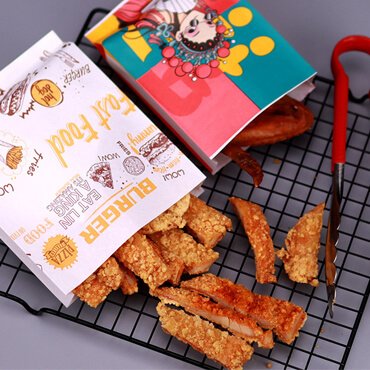
We test the complete packing sequence
We recommend starting with an in-stock sample to compare flat and gusseted handling. The buyer should load the product at normal working speed, close the bag as intended, place it in the delivery or display setup, and inspect the result after a realistic holding period. This simple trial can expose a tight opening, insufficient top allowance, unstable shape, or artwork that disappears into a fold.
For a custom printed order, the approved file should show the bag outline, fold lines, safe artwork area, print orientation, and any unprinted margins required by production. A printed pattern requires a printing plate, so a plate fee may apply. That fee is paid to the plate-making factory. When the same printing pattern is reused for a later order, a new plate fee is normally not needed. A change to size, layout, colors, or production requirements may still require review and a revised quotation.
We suggest recording the following items in the purchase order or signed specification:
- Finished bag dimensions and the dimension order
- Flat or side-gusset construction
- Gusset location and expanded depth, when applicable
- Material description agreed for the project
- Printing file, orientation, and approved colors
- Opening side and closure method
- Packing quantity and carton requirements
- Buyer’s acceptance checks and sample reference
Our broader custom flexible packaging RFQ guide helps purchasing teams organize these details. Buyers remain responsible for defining destination-market and product-contact requirements. We can review requested documents and production details, but we do not treat a general bag sample as proof for every product, market, or use condition.
Conclusion
Choose flat bags for thin, consistent items and gusseted bags for needed depth; then approve dimensions, workflow, artwork, closure, and filled samples before bulk production.