


A vacuum pouch may fit the product yet still wrinkle or contaminate at the seal. I prevent that failure by specifying the clean open-end area separately.
Measure the open-end seal area from the packed product edge to the pouch mouth. Reserve enough clean, dry film to lie flat across the complete seal bar, based on the actual product and machine. Confirm the dimension with filled trials before ordering bulk pouches.

I use the following process to convert product shape, machine limits, and operator handling into one clear pouch dimension and approval method.
What is the open-end seal area on a vacuum pouch?
Buyers often treat all unused pouch length as spare capacity. That assumption can leave too little clean film for evacuation, positioning, and final sealing.
The open-end seal area is the unused film between the packed product and the pouch mouth that supports vacuum extraction and the final heat seal. It is not product capacity. The area must reach the seal bar without stretching, folding, or carrying product residue.
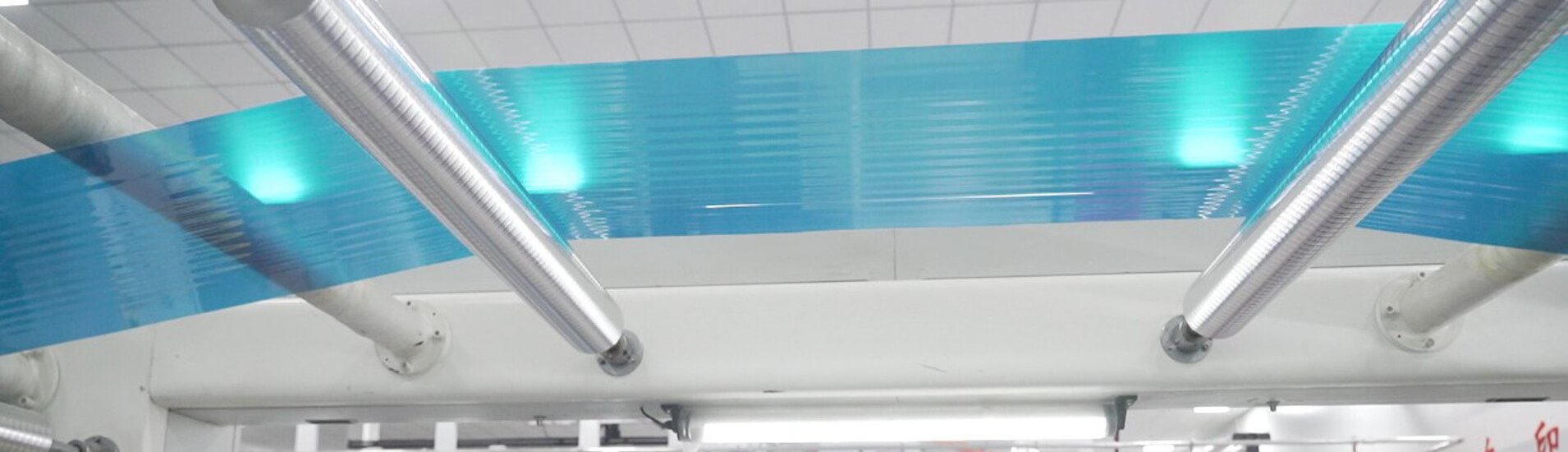
I separate product space from process space
A flat pouch becomes three-dimensional after loading. The product uses part of both the listed width and length as the film wraps around its height, corners, or irregular shape. The remaining length at the open end must still reach the machine in a relaxed position. If the film has to be pulled tightly, the operator may create folds or move the product into the working area.
The clean area performs several jobs. It lets the pouch mouth open for air removal, gives the operator or machine room to place the film, and provides uncontaminated material for the final seal. A printed bag size alone does not prove that this area exists after filling. Buyers should measure the filled condition, not only the empty pouch on a table.
Our vacuum pouch range includes customizable size and thickness options. I therefore ask buyers to identify the open edge and the required working area on the drawing. I do not describe that length as a universal factory standard, because the product, pack arrangement, and equipment determine the useful value.
Which product and machine inputs determine the required area?
Copying another company’s allowance can produce poor results on a different line. I calculate the starting dimension from the real packed product and sealer.
The required open-end area depends on product length, width, thickness, surface contamination, fill variation, pouch stiffness, chamber depth, seal-bar position, gas-flush parts, loading method, and the machine manufacturer’s instructions. The buyer’s approved trial should settle the final dimension.

I measure the worst normal packed condition
I begin with the largest normal portion, arranged exactly as the packer intends to load it. A thick or irregular product consumes more film than a flat sample with the same face dimensions. Product edges can also shift during vacuum extraction. The allowance should cover the buyer’s defined production variation without turning every bag into excessive unused material.
I then review contamination risk. Oil, moisture, powder, crumbs, or product fibers can reach the mouth during loading. The process may need more handling room so the operator can keep or restore a clean sealing zone. I avoid promising that extra length alone solves contamination. The filling method, cleaning step, product temperature, and machine settings still require validation.
| Input I request | Why it matters | Evidence I prefer |
|---|---|---|
| Maximum normal packed dimensions | The film wraps around the product’s full shape | Filled sample and measurements |
| Product surface and loose material | Residue may enter the sealing zone | Representative production product |
| Seal-bar length and position | The complete open edge must sit correctly | Machine manual and physical check |
| Chamber depth and lid clearance | The loaded pouch must fit without forced folding | Trial inside the actual chamber |
| Gas-flush or holding parts | Extra hardware may occupy the mouth area | Equipment drawing or line observation |
| Loading variation | Product position changes the remaining clear length | Repeated operator or automatic-line trials |
Buyers should also match the pouch surface to the equipment. Our comparison of smooth and embossed vacuum pouches explains why machine type must be settled before the bag specification.
How should the drawing and purchase order define the seal area?
Phrases such as “leave enough room to seal” cannot control production or inspection. I turn the requirement into named dimensions and unambiguous reference points.
The drawing should identify the open edge, finished pouch dimensions, measurement method, minimum clean length after loading, intended seal line, usable seal-bar width, print-free zone, product position, and buyer-approved tolerance. The purchase order should reference the same drawing revision and sample.
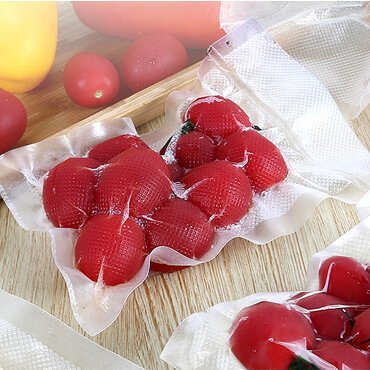
I name every reference instead of relying on “top”
The word “top” becomes unclear when operators rotate the pouch or when artwork orientation differs from the loading direction. I label the exact open edge and show the pouch width and length. I also state whether the listed dimensions are inside or outside measurements. The buyer should confirm how side and bottom seals affect usable space.
The working-area dimension needs two clear endpoints. One endpoint may be the pouch mouth or finished cut edge. The other should be a buyer-defined product-limit line or another measurable reference that remains meaningful after loading. I also mark the intended final seal line and any print-free or code area. The drawing should not imply that the entire clear length becomes the final seal band.
| Drawing field | Question it answers |
|---|---|
| Identified open edge | Which side enters the machine? |
| Finished width and length | What physical pouch is supplied? |
| Inside or outside reference | How are dimensions interpreted? |
| Minimum clean loaded length | How much process space remains after filling? |
| Intended seal line | Where does the packer close the pouch? |
| Product-limit line | How far may the contents approach? |
| Revision and sample reference | Which approved version controls the order? |
I recommend putting these fields in the quotation request before artwork or bulk conversion begins. That sequence reduces the chance that a later size change forces new artwork, plates, samples, or line adjustments.
How should buyers validate the open-end area before bulk production?
An empty bag can pass a ruler check and still fail during loading or vacuum extraction. I approve the complete filled process before volume production.
Buyers should load representative products at defined extremes, place each pouch on the intended machine, run the normal vacuum and sealing cycle, and inspect positioning, cleanliness, wrinkles, seal continuity, package shape, leakage criteria, handling, and carton fit. Record the approved size and settings.
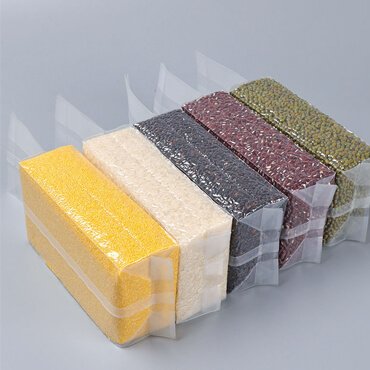
I validate repeatability, not one attractive sample
I ask the buyer or packer to run more than one pouch with the normal range of product size and operator placement. The trial should show whether the mouth reaches the bar naturally, whether the full width lies flat, and whether product residue enters the intended seal zone. The team should record the pouch orientation, product arrangement, equipment model, settings, and any cleaning step. The buyer must define the inspection and leakage criteria that fit the application.
If the mouth wrinkles, the team should diagnose the cause before simply adding length. The pouch may be too narrow, the product may sit unevenly, the seal bar may be crowded, or the operator may need a better loading method. If the clear area is consistently excessive, the buyer can evaluate a shorter pouch without reducing the validated working space. I treat the sample as a controlled process experiment, not a visual approval only.
XINYUAN provides free in-stock samples when available. A separately produced custom sample may require a sample fee. Subject to the confirmed quotation, we can return that fee or deduct it from a later bulk-order price. Our integrated production system covers raw-material production through finished products, and our production organization supports large orders and long-term supply as an operating capability. The signed drawing, approved sample, and buyer-defined test plan still remain the practical bulk references.
Conclusion
I specify vacuum-pouch seal space from the filled product and actual machine, document clear reference points, and approve repeatable sealing trials before bulk production.