


A familiar closure can still frustrate customers, disrupt filling, cover artwork, or reduce usable bag space when it is chosen without testing.
Coffee buyers should choose a zipper for an integrated press-to-close experience and a tin tie for a fold-down external closure. The right choice depends on bag style, filling, opening frequency, portion size, top layout, brand presentation, and tested performance with the actual coffee.

I compare both closures as parts of the complete coffee package rather than treating either one as a universal upgrade.
How Does Customer Use Change the Zipper-or-Tin-Tie Decision?
A closure that looks attractive on an empty sample may feel slow, unclear, or unreliable after customers open the filled bag repeatedly.
Buyers should map how customers open, dose, and reclose the coffee. A zipper supports a press-to-close motion inside the bag opening, while a tin tie closes by folding or rolling the top and bending the tie. Test both with the intended portion and user group.

I start with the consumption routine
I ask how much coffee the package contains and how quickly the buyer expects a typical customer to use it. A small trial pack may be opened only a few times. A larger household or food-service pack can be opened repeatedly. That difference affects how much value the customer places on fast alignment, tactile feedback, and the ability to reduce the pack’s volume as coffee is removed.
I also ask whether the product is whole bean or ground, because loose particles near a closure can affect the user experience. The buyer should test how cleanly customers can close the chosen feature after normal scooping or pouring. I do not assume that a closure performs identically with every grind, roast, bag structure, or user habit.
| Customer-use question | Zipper point to test | Tin-tie point to test |
|---|---|---|
| How often is the bag opened? | Repeated track alignment and closure feel | Repeated bending and fold consistency |
| How is coffee removed? | Grounds or beans near the zipper track | Product control while folding the top |
| How much product remains? | Access as the bag becomes less full | Ability to roll down the empty headspace |
| What dexterity does the user have? | Pinching and pressing across the track | Folding and bending both tie ends |
| Must the bag look neat after opening? | Shape of the reopened top | Shape and symmetry of the rolled top |
The buyer should define the desired result before asking for a quote. “Resealable” is too broad by itself. A useful brief states the number of expected openings, the customer’s dosing method, and what a correctly reclosed package should look and feel like. These requirements can then be checked with filled samples.
How Do the Two Closures Change Coffee Bag Layout and Filling?
Adding a closure without redrawing the top panel can crowd the heat-seal area, tear notch, valve, artwork, or filling opening.
A zipper uses internal top space and needs defined clearance for filling, sealing, and opening. A tin tie is attached to an outer panel and needs enough flexible top material to fold or roll. Buyers should approve a dimensioned layout for the exact bag style.
I draw the entire top area before placing a closure
For a zipper, I mark the top heat-seal zone, removable header if used, tear notch, zipper position, and the clear opening needed by the filling process. These features occupy height. If they are stacked without planning, the consumer can receive a very short grip area or the filling team can receive an opening that is difficult to access.
For a tin tie, I mark the tie length, attachment position, panel side, and the amount of top material needed for the intended fold. A tie that is visually centered on a flat bag can feel misplaced after the bag is filled and rolled. The buyer should review the filled shape, not only the flat dieline.
| Layout item | Zipper review | Tin-tie review |
|---|---|---|
| Top heat seal | Clearance above the zipper | Seal location relative to the first fold |
| Opening method | Tear or cut access to the zipper | How the first sealed opening is removed |
| Filling access | Usable width and equipment contact | Open top before final sealing and folding |
| Valve | Separation from closure and folds | Separation from rolled top and tie ends |
| Artwork | Clear space around header and zipper | Clear space around tie and fold lines |
| Finished height | Space consumed by top features | Height remaining after rolling down |
The bag style changes the calculation. A side-gusset bag, flat-bottom bag, and stand-up pouch can present the top panel differently. I ask for the filling equipment, target coffee quantity, pouch dimensions, and finished display requirement before recommending a layout.
Buyers should also coordinate the closure with the one-way valve when a valve is part of the project. My guide on coffee bag valve placement explains why the valve should be reviewed with folds, seals, product level, and artwork rather than added at the end.
What Should Buyers Test Before Choosing a Coffee Bag Closure?
An unfilled demonstration can hide top crowding, particle interference, awkward folding, poor shelf shape, and differences after repeated opening.
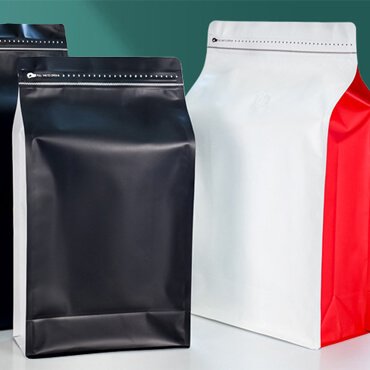
Buyers should compare filled zipper and tin-tie samples through initial sealing, opening, dosing, repeated reclosing, display, handling, and storage under their intended conditions. Record closure usability, visible gaps, product interference, package shape, and consumer feedback.
I build a side-by-side trial
The buyer should use the same coffee, fill quantity, bag size, material structure, and test environment wherever possible. Only the closure system and the top layout should change. Staff can then follow a fixed routine: fill the bag, create the intended initial seal, open it as a customer would, remove a normal dose, reclose it, and repeat the cycle.
The test should include both experienced staff and representative users when customer convenience is important. Staff may know how to align a zipper or fold a tin tie correctly, while a first-time user may expose an unclear opening cue. The buyer should record instructions that users needed, not quietly coach every participant.
I keep freshness claims separate from closure preference
A closure comparison can evaluate usability and package condition. It does not automatically establish a shelf life. If the buyer wants to make freshness or storage claims, the buyer’s qualified team should run a suitable product study using the final coffee, bag, valve, closure, sealing process, and distribution conditions.
| Test stage | What to observe |
|---|---|
| Filling | Opening access, spills, and equipment contact |
| Initial sealing | Seal area and closure clearance |
| First opening | Grip, tear or cut path, and customer understanding |
| Dosing | Product movement near the closure |
| Reclosing | Alignment, effort, tactile feedback, and visible gaps |
| Repeated use | Change in closure feel and bag shape |
| Display and storage | Rolled or zipped profile under intended conditions |
I recommend recording the sample revision and photographing the same bag after each stage. This evidence helps procurement compare options without relying on memory or appearance alone.
What Should Buyers Include in the Coffee Bag RFQ and Approval?
Quotes become misleading when one supplier prices a basic bag while another includes a closure, valve, printing, and a more complex top construction.
The RFQ should state bag style, dimensions, coffee form, fill quantity, zipper or tin-tie specification, valve requirement, filling and sealing method, artwork status, SKU quantities, samples, packing method, destination, and the buyer’s approval tests.
I make closure details comparable
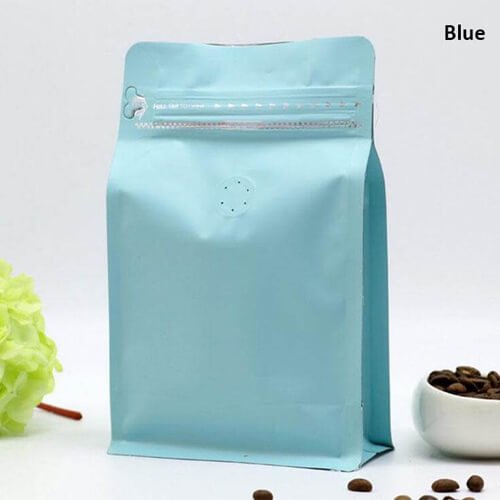
For a zipper, the buyer should identify the approved zipper type or reference sample, its position, opening method, and required top clearances. For a tin tie, the buyer should identify its length, color or finish if relevant, attachment position, panel side, and intended fold direction. If the buyer does not know a technical name, a labeled physical sample and marked photo can communicate the requirement more safely than a vague term.
The final approval should connect the closure to the exact bag drawing and artwork revision. It should also record the filled-sample test and the buyer’s filling method. A visual PDF approval alone does not show how a closure behaves with real coffee.
| Approval item | Evidence I recommend |
|---|---|
| Bag construction | Signed dimensioned drawing |
| Closure | Labeled sample and position on the drawing |
| Valve | Confirmed type and location when required |
| Filling and sealing | Trial on intended equipment or process |
| Artwork | Approved file version with clear zones |
| Customer use | Repeated opening and reclosing record |
| Incoming inspection | Agreed dimensional and visual checks |
Buyers can review XINYUAN’s coffee bag page for general format and customization context. XINYUAN also provides free in-stock samples and free artwork or typesetting service. A separately produced custom sample may require a sample fee. Subject to the confirmed quotation, I can return that fee or deduct it from a later bulk order.
A printed pattern requires a printing plate, so a plate fee may apply. The fee is paid to the plate-making factory. If a later order reuses the same printing pattern, a new plate fee is normally unnecessary. However, changing the closure or top layout can require artwork and plate review.
Our integrated production system, equipment, experienced employees, and production organization support large orders and long-term supply. I use the approved drawing and sample as the shared target, while the buyer’s filled-coffee test decides which closure fits the product and customer experience.
Conclusion
Choose a zipper or tin tie from real customer use, bag layout, filling, valve, artwork, and repeated closure tests—not appearance or a universal freshness claim.