


A thickness quote can look cheaper because two suppliers count the bag walls differently. I clarify the measurement basis before buyers compare prices or approve samples.
Specify PE ziplock bag thickness per single wall, with an explicit unit and tolerance. Measuring a closed flat bag usually includes two walls. I ask buyers to confirm the measurement location and acceptance method before comparing quotations.
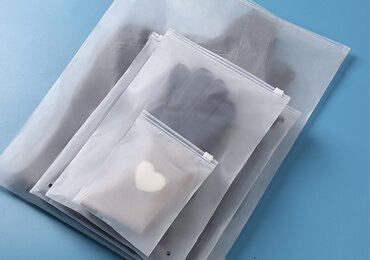
At XINYUAN, I want the purchase order and the inspection record to describe the same film. Here is how I turn an ambiguous thickness request into a specification a buyer and manufacturer can both check.
Should a PE ziplock bag quote state single-wall or double-wall thickness?
A quotation that says only “100 microns” leaves a costly question unanswered. I establish whether that number describes one wall or both walls together.
I recommend quoting the thickness of one film wall. If a supplier uses a combined two-wall figure, I request its single-wall equivalent in writing before comparing prices.
Put the measurement basis beside the number
I write “single-wall body film thickness” next to the value, rather than burying that definition in an email. A bag has a front wall and a back wall. Closing an instrument across both adds those walls together. The result is not a direct reading of either wall separately.
For an illustrative comparison, a quote for 100 micrometres per wall and a quote for 100 micrometres combined describe different film quantities. In the second interpretation, two equal walls would each be about 50 micrometres. These numbers explain the arithmetic; they are not XINYUAN stock specifications or recommendations for a particular load.
I also define the area being measured. The zipper profile is thicker than the body film. A sealed edge, folded region, or reinforced section can add material. I do not compare a reading at those locations with a body-film target.
| Wording in a quotation | My clarification request |
|---|---|
| 100 micrometres, single wall | Confirm nominal value and acceptance limits |
| 100 micrometres, double wall | Confirm the intended thickness of each wall |
| 100 micrometres, basis unstated | Obtain a corrected written specification |
| Heavy duty | Request a measurable thickness and filled-bag checks |
Our ziplock bag product page lists polyethylene among the available materials. I use that product reference to start the discussion, then confirm the actual material and thickness for the order.
How should buyers convert mils, microns, and millimetres?
A unit error can dwarf a normal price difference. I convert every quotation to one shared unit before deciding which supplier offers a comparable bag.
I use 1 mil = 25.4 micrometres and 1 millimetre = 1,000 micrometres. I retain the single-wall basis during conversion and ask suppliers to define any use of “gauge.”
Convert the unit without changing the wall count
I prefer micrometres, written as µm, as the shared comparison column. Buyers can retain mils alongside it when their existing purchasing documents use US units. A mil is one thousandth of an inch; it is not a millimetre. Thus, 2 mil is 50.8 µm, or 0.0508 mm, for the same wall.
| Thickness in mils | Thickness in µm | Thickness in mm |
|---|---|---|
| 1 mil | 25.4 | 0.0254 |
| 2 mil | 50.8 | 0.0508 |
| 3 mil | 76.2 | 0.0762 |
| 4 mil | 101.6 | 0.1016 |
I treat these as conversion examples, not application grades. A buyer still needs to select a film for the product and handling conditions. I also avoid silently rounding 50.8 µm to 50 µm in the purchase order. The parties should agree whether a rounded commercial value is acceptable.
The word “gauge” needs its own definition. Suppliers may use a trade convention or use the word loosely for thickness. I ask for the equivalent in µm instead of guessing from the number alone. I then carry that agreed value into the sample label, quotation, and order.
For buyers checking terminology, this manufacturer's thickness explanation discusses single-wall readings and unit conversions. My purchasing recommendation is to write the actual unit and wall basis on every line item, even when a familiar convention seems obvious.
How should buyers measure a sample without counting the zipper or folds?
An incorrect reading can make a suitable sample appear out of specification. I agree on the measurement location before either side rejects or approves the film.
I recommend measuring an isolated, flat body-film wall with a suitable film-thickness instrument. I exclude zipper profiles, seals, folds, and damaged areas, and record multiple readings with their locations.
Agree on a repeatable inspection routine
I first identify a body area that represents the specification. If the buyer permits a destructive check, an inspector can cut a sample and separate one wall. The inspector should avoid stretching or creasing the film while preparing it. I ask the parties to agree on the instrument, contact pressure or operating procedure, and calibration checks appropriate to their inspection system.
I do not rely on a ruler or the feel of a bag between fingers to settle a thickness dispute. I also avoid treating a single measurement as a complete batch result. My proposed inspection record includes the bag identifier, wall measured, position, individual reading, and instrument used. The buyer and supplier should agree on how many bags and locations to check before production.
A two-wall measurement can help identify a possible factor-of-two misunderstanding. However, simply halving it assumes both walls contribute equally and that no extra fold is present. I prefer isolated-wall readings when the result will determine acceptance.
| Location | How I treat the reading |
|---|---|
| Flat, isolated body wall | Compare with the agreed body-film specification |
| Closed flat bag | Label as a combined-wall reading |
| Zipper or seal | Assess separately from body thickness |
| Fold or gusset | Check how many film layers are included |
I keep the raw readings as well as the calculated average. That record helps the parties distinguish measurement differences from a real production variation without relying on photographs of an unlabelled instrument display.
What should the purchase order say beyond a nominal thickness?
Matching one number does not ensure matching bags. I connect the thickness requirement to tolerances, material, closure function, and a realistic sample approval process.
I include nominal single-wall thickness, agreed acceptance limits, measurement procedure, material description, dimensions, and filled-bag performance checks. I distinguish an average target from a minimum requirement rather than treating them as interchangeable.
Define what passes before comparing the final price
I ask the buyer whether the thickness requirement controls a nominal average, individual readings, or a specified minimum. Those approaches can lead to different acceptance decisions. I do not insert a universal percentage tolerance: the supplier must confirm the proposed limits and the buyer must accept them for that order.
I also keep material and construction consistent across quotations. Thickness alone cannot establish puncture resistance, seal quality, or zipper function. For example, a bag that meets its body-film target can still be inconvenient if the closure is difficult to engage. I ask buyers to fill samples with representative contents and check loading, repeated opening, and the handling steps that matter to their operation.
My suggested RFQ wording is: “PE ziplock bag; body-film thickness stated per single wall in µm; supplier to propose nominal value, acceptance limits, and inspection procedure for buyer approval.” I would add the bag dimensions, contents, quantity, and artwork requirements before requesting a firm quote.
We provide free in-stock samples to help buyers review suitable existing formats. A separately produced custom sample may require a fee. We can return or deduct that fee from a later bulk order, subject to the confirmed quotation. I distinguish a stock reference sample from the final approved production specification.
For a sourcing inquiry, I ask buyers to send their current thickness notation, a sample if available, and the product’s weight and shape. That gives us a concrete basis for discussing an appropriate film and an inspectable bulk order.
Conclusion
I specify single-wall thickness, convert units consistently, measure clear body film, and agree acceptance limits before buyers approve a PE ziplock bag order.