


A coffee bag can have the right valve location yet the wrong valve design. I check particle exposure before buyers reuse one valve across beans and ground coffee.
For ground coffee or dusty products, I start with a filtered degassing valve. For clean whole beans, I consider a supplier-approved unfiltered model. I confirm the exact valve, bag material, and filled-pack performance before approving either choice.
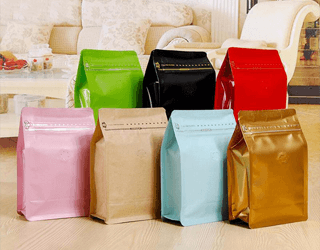
At XINYUAN, I separate valve selection from bag shape and artwork. A valve that looks identical from outside may have a different internal construction. Here is how I turn that hidden difference into a clear purchasing decision.
When should buyers ask for a filtered coffee valve?
A request for a “coffee valve” leaves particle control undefined. I ask what can reach the valve before choosing its internal construction.
I request a filtered option when ground coffee, fines, or broken-bean dust may contact the valve. I treat clean whole beans as a possible unfiltered application, subject to the valve maker’s recommendation and a filled-pack trial.
Start with the actual coffee condition
I do not divide every project into two absolute categories called beans and powder. Whole-bean packs can contain fragments and fines. Those particles can move toward the valve during filling, handling, or storage. I ask the roaster to describe the material actually entering the bag, including the amount of loose dust.
A filter layer is intended to limit product particles reaching the valve mechanism. For example, Galio’s filtered valve description identifies grounds exclusion as a function of that specific design. I use this as a reason to ask about filtration, rather than assuming every valve performs identically.
For a low-dust whole-bean application, I may discuss an unfiltered model listed for that use. I still ask for the exact component identity. I do not accept a generic claim that “all bean bags use the same valve.”
| Product entering the bag | My starting request | Evidence I want |
|---|---|---|
| Ground roasted coffee | Filtered candidate | Supplier confirmation for that product |
| Whole beans with visible fines | Review particle exposure | Filled-pack trial with representative coffee |
| Clean whole beans | Compare approved candidates | Model-specific application guidance |
| Product or process change | Review the valve again | Updated component and trial records |
Our custom coffee bag page confirms that some XINYUAN coffee pouches have gas valves. It does not establish which filter design suits a particular buyer’s coffee. I confirm that separately in the project specification.
Does adding a filter automatically make a valve better?
A filter is one design feature, so it cannot settle the whole packaging decision. I compare complete valve specifications rather than treating the filter label as a quality grade.
I judge a valve by its intended application, particle protection, operating data, attachment compatibility, and performance in the finished bag. A filtered valve still needs the right installation and product trial.
Compare models under matching conditions
I ask the component supplier for the applicable opening pressure, closing behavior, and gas-flow information. I also request the conditions behind those figures. A number without a unit, test pressure, or method is difficult to compare with another quotation. I do not invent a universal target for every coffee weight or roast.
The bag and installation process matter as well. I identify the pouch’s inner sealing layer, the valve attachment method, and any equipment requirements. A component that suits one film or applicator should not be substituted into another job on appearance alone. The supplier should confirm compatibility for the proposed combination.
I also avoid using a filter as a shortcut to a shelf-life claim. The finished package includes its laminate, seals, closure, valve, and filling process. I ask the buyer to evaluate the complete pack against its own storage and product requirements.
| Comparison field | What I ask the supplier to state |
|---|---|
| Component identity | Manufacturer, model, and revision |
| Filter construction | Presence and intended product use |
| Operating data | Units, conditions, and test method |
| Attachment | Compatible material and application process |
| Substitution | Written approval before a model change |
I keep these details in a comparison sheet. This helps a sourcing manager see whether a lower price represents the same component or a different proposal. I compare the total bag quotation only after the technical differences are visible.
What should the coffee bag RFQ say about valve filtration?
A short quotation line can hide a component change. I make filtration a named specification so the factory, buyer, and inspector approve the same valve.
I include the coffee form, fines exposure, fill weight, packing process, valve model, filter requirement, attachment method, and approval evidence in the RFQ. I require written review before substitution.
Keep the component separate from the artwork
I begin with the coffee: whole bean or ground, intended fill weight, expected fines, and the buyer’s packing sequence. I ask when the coffee is packed after roasting because the process context helps the component supplier assess the proposed use. I do not prescribe one waiting period for every product.
Next, I identify the pouch and the valve as separate items. The drawing records the bag format and component location. The component record identifies whether a filter is included. An outside photo can help communicate appearance, but it cannot prove the internal filter construction.
I use wording such as: “Supplier to propose a one-way degassing valve for the stated coffee, identify filter construction, and provide model-specific application and test information for buyer approval.” Once the proposal is accepted, I replace that open request with the approved model and attachment details.
I also record which changes require another review. A new grinder setting, a different fill weight, or a change from beans to ground coffee may justify a fresh trial. A new valve supplier certainly needs a documented comparison. I do not let a reorder description shrink back to “same coffee bag” after the original approval.
We provide free artwork and typesetting service. I use that support to align print with the approved bag layout, while keeping the valve specification in the technical purchase record. A good artwork proof confirms appearance; it does not replace component verification.
How should buyers approve the valve on a filled sample?
An empty pouch cannot show how coffee particles reach its valve. I approve the proposed component using representative coffee and the buyer’s actual handling sequence.
I ask buyers to test filled, sealed samples with the proposed valve, compare handling positions, inspect particle contact, and review valve function using an agreed procedure. I retain the component identity with the results.
Define the trial before judging the result
I propose a trial that records the coffee description, filling conditions, pack weight, valve model, and bag construction. The buyer and supplier should agree on the sample quantity, observation period, handling steps, and acceptance criteria before starting. I do not claim that an arbitrary overnight check proves long-term performance.
I ask the team to include the package orientations expected in cartons and storage. If coffee contacts the valve during ordinary movement, the trial should reflect that contact. I also inspect the attachment region for visible damage or separation. Any functional check should follow a suitable agreed procedure or the valve supplier’s instructions.
For technical context, Plitek lists filtered degassing designs for ground products and describes testing packaged coffee. I take that as support for evaluating the product and valve together. I do not transfer another manufacturer’s results to a XINYUAN bag.
| Trial record | Why I retain it |
|---|---|
| Coffee and fines description | Identifies what the valve encountered |
| Valve model and filter detail | Prevents an unrecorded component change |
| Bag and attachment details | Connects results to the tested construction |
| Procedure and acceptance result | Makes the approval reviewable |
We provide free in-stock samples for reviewing available formats. A separately produced custom sample may require a fee, which we can return or deduct from a later bulk order subject to the confirmed quotation. For a specific valve approval, I confirm that the sample actually uses the proposed component before the buyer relies on it.
Conclusion
I select filtration from particle exposure, confirm the exact valve and attachment, and approve the filled coffee pack before buyers commit to bulk production.