


Large ziplock bags fail when the fold is chosen from appearance alone. I compare the product shape, opening behavior, and storage method before selecting a gusset.
Choose a bottom gusset when the bag must stand or accept extra depth at its base; choose side gussets when the opening must expand across the width. Confirm filled dimensions with a physical sample before ordering.

I treat a gusset as a functional dimension, not a decorative fold. The sections below show how I match the gusset to the product, the buyer’s packing line, and the final storage position.
What changes when a large ziplock bag uses a bottom or side gusset?
A gusset changes how a flat bag opens, carries volume, and rests after filling. The wrong location can leave useful space inaccessible or make the pack unstable.
A bottom gusset expands the base and can help a filled bag stand. Side gussets expand the body across its width and can suit bulky or irregular contents that need a wider opening.
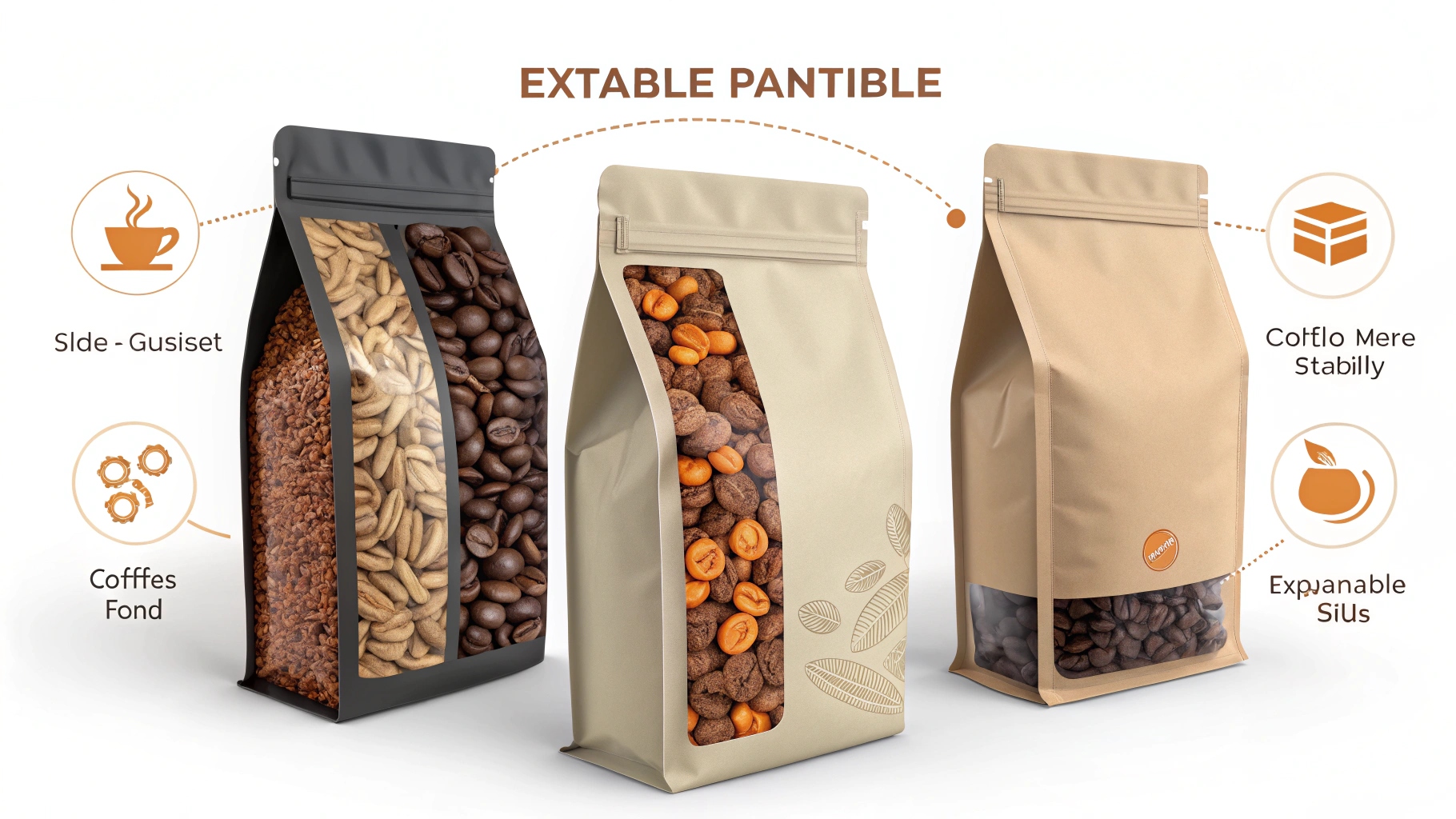
The fold determines the working shape
When I discuss a large PE ziplock bag, I first ask where the product needs extra space. A bottom gusset unfolds under the contents and creates a broader base. That can make a filled bag easier to place in a carton, tray, shelf, or work area. It does not automatically make the bag suitable for every weight or product.
A side gusset creates panels along the sides. When the bag opens, the panels increase the internal width and can help the mouth accept wide or irregular items. The bag may still lie flat when empty, but it will not present the same base as a bottom-gusset bag.
I separate three dimensions in my drawings: flat width, filled width, and gusset depth. Buyers sometimes quote only the flat outline and then expect the same usable volume after the fold opens. That creates disagreements at sampling because suppliers may measure from different positions.
| Gusset location | Main change | Typical buyer priority |
|---|---|---|
| Bottom gusset | Expands the base | Standing or stable placement |
| Side gusset | Expands body width | Bulky contents and wider access |
| No gusset | Keeps a flat profile | Documents or thin items |
XINYUAN’s ziplock bags page shows multiple material and closure options. I still confirm the gusset location, dimensions, and product before recommending a custom format.
Which gusset fits the product shape and packing sequence?
The same nominal bag size can behave differently with clothing, components, powders, or irregular parts. I select the fold from the way the product enters and settles.
Choose a bottom gusset for a defined base footprint; choose side gussets when the product needs width and side expansion. Test both options with representative contents when the choice is uncertain.
Match the fold to the loading route
I ask where the product first touches the bag. A broad flat item may need a wide mouth so the operator can slide it in without bending. A collection of small parts may need a base that opens and supports the weight. A soft item can fill a gusset differently from a rigid item even when the two have the same measured volume.
The packing sequence matters. Manual loading gives the operator time to open and shape a gusset. Automatic loading may depend on grippers, vacuum cups, or guides that prefer a predictable flat edge. A bottom gusset can change how the bag sits on a conveyor. Side panels can change how the opening is held. I request a short description of the line before finalizing the layout.
I also consider removal. A side-gusset bag can make a wide item easier to remove, while a bottom-gusset bag can hold contents lower in the pack. If the user will repeatedly open and close the zipper, the gusset should not push the tracks out of alignment when the bag is full.
| Product condition | First question I ask |
|---|---|
| Wide or flat item | Does the mouth need more width? |
| Heavy contents | Does the base need controlled support? |
| Irregular parts | Where will empty space collect? |
| Repeated access | Can the zipper stay aligned when filled? |
I do not claim that one gusset is universally stronger or better. I use the packing route and the filled sample to choose the geometry.
How should buyers specify gusset dimensions and bag size?
“Large ziplock bag with gusset” is not a complete request. Buyers need a measurement system that identifies the flat and opened states.
State whether dimensions are inside or outside, identify the gusset depth, and show the opening direction. Include the zipper position and the length datum on the drawing.
Put every dimension on one controlled drawing
I typically label a flat bag as width by length, then add gusset depth according to its location. For a side gusset, I show the flat width, side-panel depth, and length. For a bottom gusset, I show width, length, and the base depth. I also state whether a dimension is measured with the gusset folded or extended.
The opening needs its own reference. A ziplock bag may have a lip above the zipper, and the usable length can differ from the overall length. I mark the zipper centerline and the bottom of the zipper so the factory and buyer use the same datum. This prevents a request for “300 mm long” from producing different usable spaces.
The drawing should show side seals, bottom seal, gusset folds, zipper ends, and any tear or hang-hole feature. If the buyer has an existing sample, I ask for a photo plus measurements because a photo alone cannot define a fold depth. I avoid inventing a universal tolerance; the supplier should propose workable limits for approval.
| Drawing field | Why it matters |
|---|---|
| Flat width | Controls material usage and flat packing |
| Flat length | Defines the outer outline |
| Gusset depth | Defines expanded capacity |
| Zipper datum | Defines usable opening and lip |
| Inside or outside basis | Prevents incompatible quotations |
| Folded or extended state | Makes gusset measurement repeatable |
I can provide free artwork and typesetting support for a printed bag. The artwork file should show the gusset panels and print direction so important text does not land across a fold.
How should buyers approve a bottom or side gusset before bulk production?
An empty sample cannot prove how a large bag will stand, open, or carry its contents. I approve gusset geometry with the real handling sequence.
Fill a representative sample, form the gusset, close the zipper, and check access, stability, dimensions, and storage. Record the accepted sample and drawing revision before placing the bulk order.
Use the filled bag as the reference
I start with the buyer’s representative product or a substitute with similar size, weight, and shape. I measure the bag empty, after loading, and after the product settles. The measurements reveal whether the flat specification leaves enough useful space.
For a bottom gusset, I check whether the base opens evenly and whether the bag remains stable on the intended surface. For a side gusset, I check whether the panels expand without twisting and whether the mouth remains wide enough for loading and removal. For both formats, I close and reopen the zipper several times after filling. I look for misalignment, trapped product, and stress at the fold or seal.
The buyer should also check carton fit and pallet or shelf orientation. A bag that stands well on a table may compress differently in a case. I keep a dated sample photo and a signed drawing with the purchase order. If the product, fill weight, or storage method changes, I review the gusset instead of copying the old size.
XINYUAN provides free in-stock samples where a matching format exists. A custom sample may require a fee; for a later bulk order, we can return or deduct that fee subject to the confirmed quotation. Our production equipment and organization support large orders, while the approved filled sample remains the practical reference for repeatable supply.
Conclusion
Select the gusset from product shape and handling, define flat and expanded dimensions clearly, and approve the filled ziplock bag before bulk production.