


Calling a produce bag “anti-fog and breathable” is not a usable specification. Without product and cold-chain details, buyers may approve the wrong airflow design.
Buyers should specify anti-fog produce-bag breathability from the produce type, preparation, fill weight, film area, sealing method, temperature journey, storage time, and target internal atmosphere. Then validate the complete bag with the real product under actual cold-chain conditions.
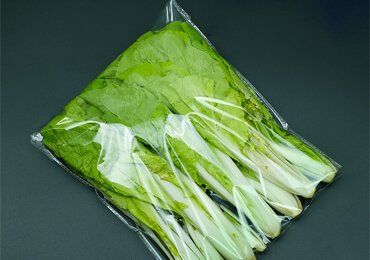
I separate visibility, gas exchange, moisture behavior, and food-safety evidence so each requirement can be tested clearly.
What Product and Cold-Chain Inputs Define Breathability?
Two products that look similar can behave differently after cutting, washing, cooling, filling, and transport, so a generic produce-bag specification creates risk.
Start with the exact produce, whole or cut condition, pack weight, initial product temperature, storage range, trip duration, display conditions, and sealing method. These inputs guide film-permeability and perforation decisions.
Define the packed product precisely
I ask buyers to name the crop and variety when known, then describe how it reaches the bag. Whole produce, trimmed produce, and fresh-cut produce should not be treated as the same application. Washing, surface moisture, cut area, fill weight, and the time between processing and cooling can change the conditions inside the package.
Fresh produce continues to respire after harvest. The U.S. Department of Agriculture explains that different fresh-cut fruits and vegetables respire at different rates, so film permeability must be considered with the packed product. Its overview of fresh-cut produce packaging also highlights the importance of oxygen balance rather than a one-film answer for every crop.
Map the temperature journey
The specification should include more than a storage set point. I ask for product temperature at filling, cooling method, warehouse temperature, transport range, retail display condition, and likely temperature changes during handling. A bag that looks clear in a stable cold room may behave differently when it moves between warmer and colder areas.
| Input | Buyer should provide | Why it matters to the trial |
|---|---|---|
| Produce | Crop, variety, whole or cut | Defines the actual respiration and moisture case |
| Preparation | Washed, dried, trimmed, or processed | Changes surface water and package conditions |
| Fill | Weight, volume, and pieces per bag | Changes product-to-film relationship |
| Temperature | Filling, cooling, transport, and display range | Creates the real condensation and respiration journey |
| Time | Expected storage and distribution duration | Sets the required test period |
| Closure | Open, tied, clipped, zipped, or heat sealed | Changes how freely the pack exchanges gases |
These details should be confirmed before the buyer asks for a breathable or perforated design.
How Do Anti-Fog Treatment and Perforation Differ?
When buyers use “anti-fog,” “breathable,” and “perforated” as synonyms, suppliers may quote different functions under one unclear request.
Anti-fog treatment manages how condensed moisture appears on the film surface. Film permeability and intentional perforations manage exchange through the package. A produce bag may need one, both, or neither, depending on validated requirements.
Separate the four specification choices
I divide the request into base film, anti-fog treatment, inherent film permeability, and added openings. The base film and thickness influence converting, sealing, clarity, and transport through the film. Anti-fog treatment is intended to reduce visible droplet formation by changing how condensed moisture spreads on the treated surface. Perforations are physical openings. Their presence, size, count, and pattern change exchange through the finished bag.
The words “micro-perforated” or “vented” alone do not fully define a design. Buyers should ask how the opening pattern will be specified and inspected. A non-perforated bag is not automatically non-breathable because gases can still pass through many films at different rates. Likewise, a perforated bag does not automatically suit a particular crop, temperature, or shelf-life target.
| Feature | Main purpose | Buyer should confirm |
|---|---|---|
| Anti-fog treatment | Maintain clearer product visibility when condensation occurs | Treated side, test method, temperature cycle, and visual acceptance |
| Film permeability | Allow gases or vapor to pass through the film | Material, thickness, test conditions, and supplier data |
| Micro-perforation | Add controlled small openings | Hole method, size range, count, pattern, and location |
| Larger vents | Provide more open exchange or drainage | Opening size, number, placement, and effect on handling |
Our anti-fog bag page confirms that size, thickness, printing, breathability, and barrier characteristics can be discussed as custom requirements. I still recommend approving them as separate lines instead of one marketing phrase.
How Should Buyers Validate the Finished Bag?
A film data sheet or empty sample cannot show how the final bag will perform with real produce, seals, print, perforations, cartons, and temperature changes.
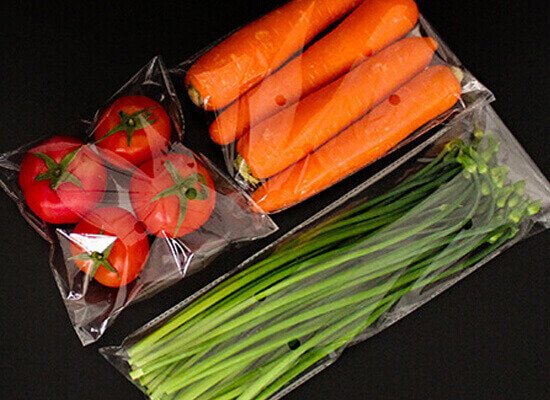
Run a controlled pilot with the actual product, fill weight, bag construction, sealing process, cooling method, carton, storage temperatures, and distribution time. Compare visibility, condensation, package shape, product condition, gas readings when relevant, and seal integrity.
Build a comparison that can be repeated
I recommend testing the proposed bag against a current approved package or another defined control. The buyer should pack enough units to see whether results are consistent. Each group should use produce from the same lot where practical, the same fill weight, the same sealing process, and the same temperature schedule. The team should record times and temperatures instead of relying on memory.
The visual review should check front-panel clarity, moisture pattern, printed-information readability, package shape, and any blocking between wet film surfaces. The functional review should check seals, perforation location, handling, carton fit, and whether the bag works on the intended packing equipment. The product-quality team should define its own acceptance measures for appearance, odor, texture, weight change, and other crop-specific indicators.
If the project relies on a modified internal atmosphere, qualified personnel should measure the relevant gases during the test. A packaging supplier should not guess a target atmosphere or shelf life without the buyer’s product data and validation. Food-safety controls, refrigeration, sanitation, labeling, and destination-market requirements also remain separate responsibilities. Anti-fog appearance does not prove food-contact compliance, microbial safety, or shelf life.
We provide free in-stock samples for early comparisons. When the exact film, perforation, print, size, and seal must be tested together, a separately produced custom sample may require a fee. Subject to the confirmed quotation, we can return that fee or deduct it from a later bulk order.
What Should the RFQ and Approval Record State?
An RFQ that asks only for “clear breathable anti-fog bags” leaves the supplier to guess the product, test conditions, perforations, and acceptance standard.
State the produce and process, fill weight, dimensions, material direction, anti-fog surface, permeability or perforation requirement, closure, print, test temperatures, distribution time, compliance documents, pilot method, acceptance criteria, quantity, and approved revision.
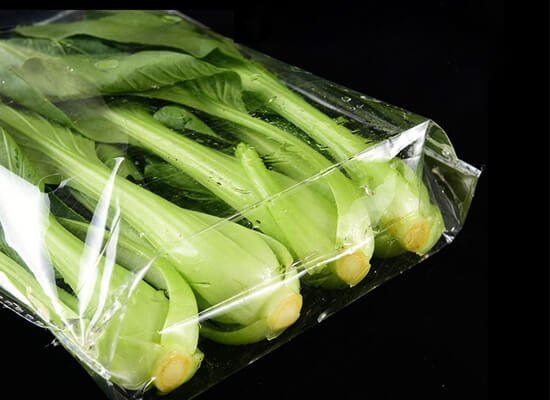
Turn the trial into a controlled specification
I recommend attaching a simple pack profile to the RFQ. It should identify the produce, preparation method, surface condition, fill weight, bag size convention, sealing equipment, planned case pack, temperature journey, and target use period. If the buyer already has required gas-transmission values, those values should include the test method and conditions. If the design uses perforations, the drawing should identify their location and the agreed way to measure them.
The artwork file should show print areas, unprinted viewing areas, registration-sensitive features, and any zone that must remain free of holes. A printed pattern requires a printing plate, so a plate fee may apply. The fee is paid to the plate-making factory. If the same printing pattern is reused for a later order, a new plate fee is normally not needed.
The approval record should name the physical sample, film and thickness, treated surface, perforation revision, bag dimensions, closure, artwork version, packing method, test lot, test dates, conditions, results, approver, and approval date. Any later change should create a new revision.
Our custom flexible packaging RFQ guide provides a broader request structure. For anti-fog produce packaging, the product profile and validation method deserve their own attachment.
Our integrated production system and experienced employees support large orders and long-term supply. A clear, tested specification gives our team a dependable target for bulk production and future reorders.
Conclusion
Specify anti-fog visibility and breathability separately, then validate film, perforations, sealing, produce load, and cold-chain conditions before approving bulk production.