


An undersized document pocket bends forms and slows staff, while an oversized pocket can obstruct printing, sealing, stacking, or handling.
Buyers should size a specimen bag’s document pocket from actual paperwork, fold method, sheet count, insertion direction, retention feature, and gloved workflow. Test the full document set in a dimensionally correct filled bag before approving pocket width, height, opening, flap, and clearances.
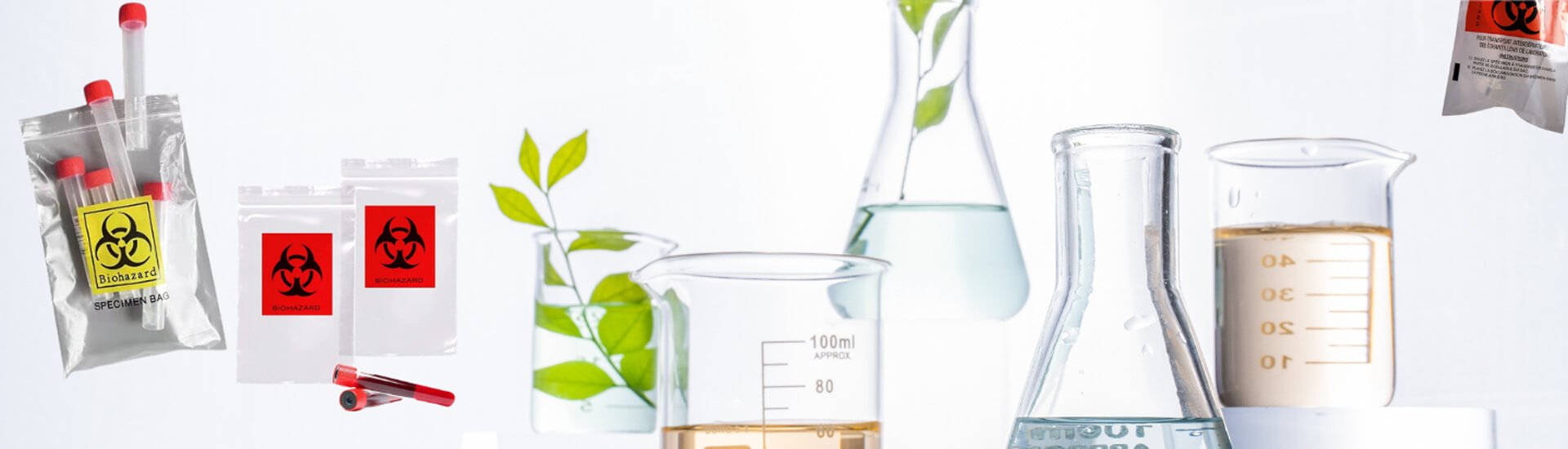
I use the following process to turn “add a paperwork pouch” into a measurable specification that purchasing and laboratory teams can approve together.
What Must Fit Inside the Specimen Bag Document Pocket?
A pocket chosen from the bag’s outside size may fail when real forms are folded, stacked, labeled, and inserted during a busy collection workflow.
Buyers should list every document, label backing, and record that may enter the pocket, then confirm sheet size, fold, thickness, maximum quantity, and insertion order. The largest routine document set—not one empty sheet—should control the usable pocket size.
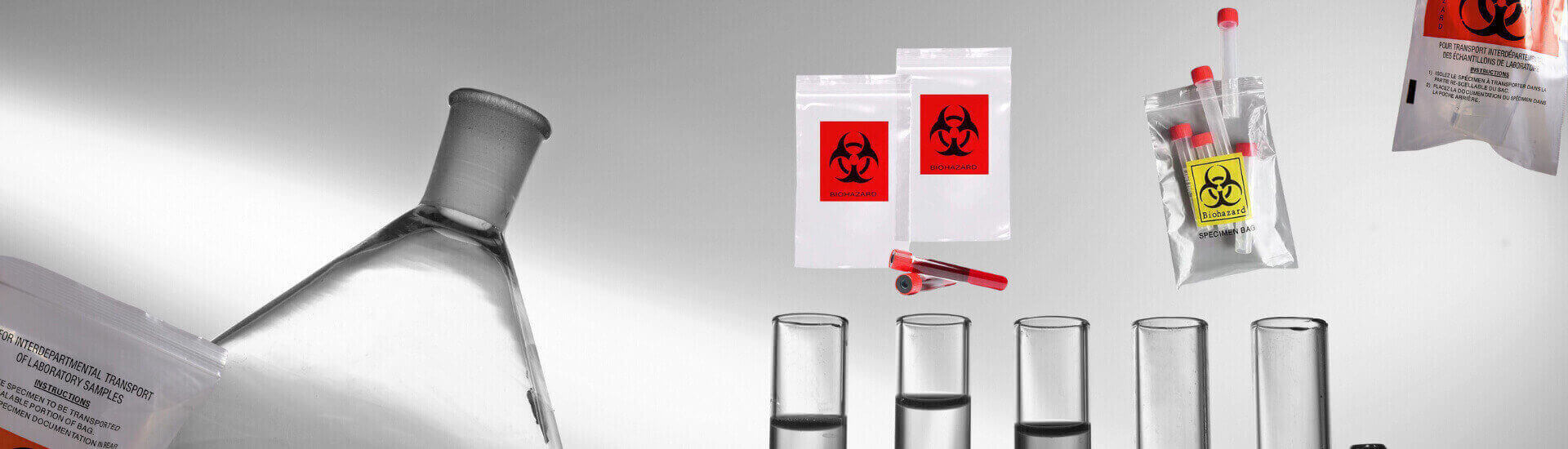
I begin with the actual paperwork set
I ask the buyer to send blank examples or dimensioned mock-ups of the documents used in the intended workflow. A requisition form, chain-of-custody record, routing sheet, label liner, or other paperwork can have different folds and stiffness. The buyer should remove or mask sensitive information before sharing samples. I need the physical format, not private patient or customer data.
The team should define the normal set and the maximum expected set. One folded sheet may slide easily into a pocket that becomes tight with three sheets, a label backing, and a card. Paper thickness also changes the stack. Therefore, I do not recommend sizing only from a standard paper name such as A4 or Letter. The buyer should provide actual finished dimensions after folding.
| Paperwork input | What I ask the buyer to measure | Why it matters |
|---|---|---|
| Largest form | Width and height after the intended fold | It sets the basic usable pocket area |
| Maximum document set | Total thickness and sheet count | It reveals whether the opening and pocket need extra room |
| Labels or cards | Finished dimensions and stiffness | Rigid items may catch at a narrow opening |
| Insertion order | Which item enters first and which remains visible | It affects access and viewing needs |
| Retrieval method | How staff remove documents at destination | It influences opening position and finger clearance |
I also ask whether the paperwork must remain flat, whether a barcode must stay visible, and whether staff need to read information through the pocket. Those are workflow requirements, not automatic product claims. The buyer’s laboratory, quality, and compliance teams should define what information may travel with a specimen and how it must be protected.
How Should Pocket Dimensions Relate to the Main Specimen Bag?
A document pocket can fit the form but still fail if it overlaps the main closure, printing, tear area, seams, or handling points.
The pocket should fit within a dimensioned clear zone on the main bag. Buyers should define usable pocket width and height separately from outside bag dimensions, while reserving space for seals, closure, printed warnings, labels, tear features, and operator grip.
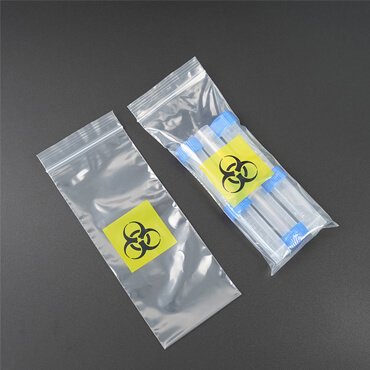
I map the bag as functional zones
I divide the front and back of the bag into functional areas before placing the pocket. The main compartment needs its own opening and closure area. Printed instructions, symbols, check boxes, write-on panels, or buyer artwork may need defined positions. A tear-open feature or sealed edge also needs clearance. Finally, staff need a place to grip the bag without constantly pressing on the documents.
The document pocket should not be dimensioned as if its entire outside rectangle were usable. Side and bottom attachments reduce the internal area. A flap or retaining lip can reduce the effective opening. I therefore put both outside dimensions and usable dimensions on the drawing when the distinction helps the buyer inspect samples.
| Main-bag zone | Pocket question | Approval evidence |
|---|---|---|
| Primary closure | Does the pocket opening stay clear of the closure? | Filled-bag sealing and opening trial |
| Printed information | Does the pocket cover any required artwork? | Approved layered artwork proof |
| Tear or access area | Can staff open the main bag without catching the pocket? | Gloved handling trial |
| Bag seams | Does the pocket attachment have defined clearances? | Dimensioned construction drawing |
| Grip area | Can staff carry and sort the bag comfortably? | Workflow simulation with real contents |
The relationship also changes when the main compartment is filled. Tubes, containers, absorbent material, or other project-specific contents can make the bag curve or bulge. That change can reduce the pocket’s apparent width and make papers harder to insert. Buyers should therefore test the pocket on a filled representative bag, not only on a flat production sample.
Which Pocket Opening and Retention Details Should Buyers Specify?
A correctly sized pocket can still lose or trap paperwork when its opening direction, lip, flap, or access clearance does not match staff movement.
Buyers should specify whether the pocket opens at the top or side, which edge leads during insertion, whether it needs a retaining flap or extended back, and how much finger clearance staff require. The decision should follow the actual packing and receiving workflow.
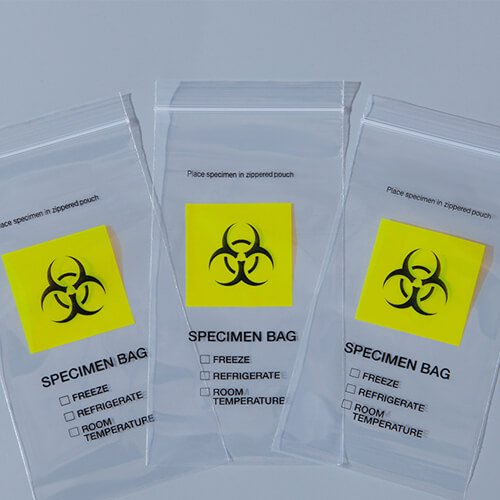
I trace insertion and retrieval separately
The person inserting paperwork may hold the bag differently from the person retrieving it. A collection-site employee may insert forms after the specimen compartment is closed. A receiving employee may sort several bags and remove documents at another workstation. I ask the buyer to act out both steps with gloves and the actual document stack.
A top-opening pocket is easy to understand, but it may need a retention feature if the workflow turns bags upside down or handles them loosely. A side opening may suit a particular sorting direction but can be awkward if the bag is stacked tightly. I do not call either design universally safer. I ask the buyer to choose based on the intended orientation and handling test.
I define retention without blocking access
A flap, extended backing panel, tuck feature, or another construction detail can help retain papers, but it can also slow insertion. The drawing should show the feature clearly. The buyer should test whether the maximum document set passes under it without bending or snagging.
| Workflow question | Design detail to confirm |
|---|---|
| Which hand holds the bag? | Opening side and grip clearance |
| Are gloves worn? | Finger space and edge accessibility |
| Is the bag stacked upright or flat? | Opening direction and retention feature |
| Must a barcode remain visible? | Clear viewing zone and document orientation |
| Are papers removed before the main bag is opened? | Separation of the two access paths |
| Can the bag invert during internal handling? | Retention test under the buyer’s conditions |
XINYUAN provides free artwork and typesetting service, so I can help place pocket outlines, printed areas, and clear zones on one proof. The buyer still needs to confirm the workflow and required markings. I do not treat artwork approval as proof that the pocket works with real forms or gloved hands.
What Should Buyers Approve Before Ordering Custom Specimen Bags?
A product photo cannot confirm usable pocket dimensions, paper retention, closure clearance, filled-bag access, printing, or the buyer’s regulated workflow.
Before bulk production, buyers should approve the main bag and pocket drawing, physical document set, filled sample, opening and retention method, artwork, packing format, inspection criteria, and destination-specific requirements identified by their qualified teams.
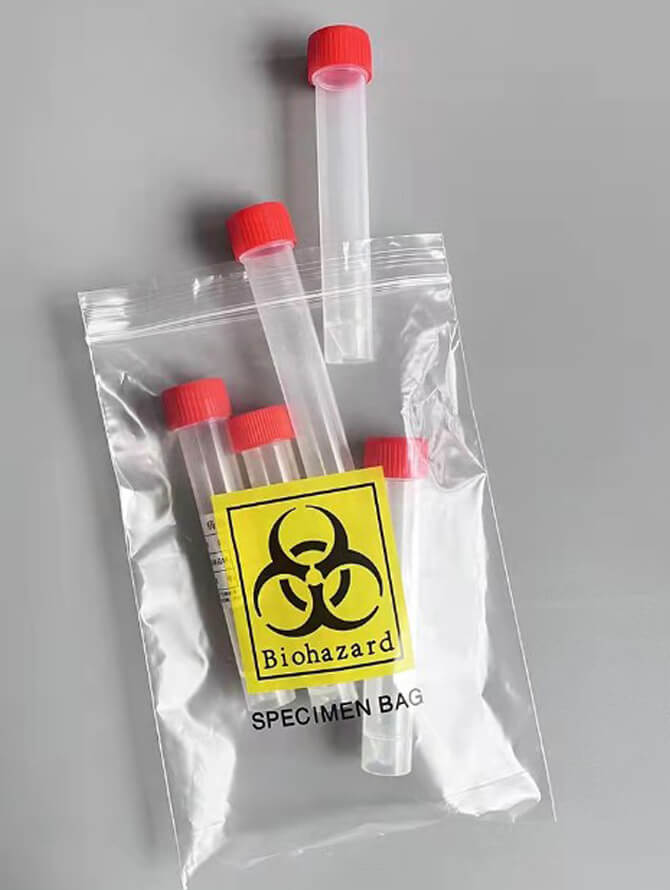
I use a combined drawing and sample record
The final drawing should show main bag dimensions, pocket outside dimensions, usable pocket area, opening edge, attachment edges, flap or lip, closure position, and printed zones. The sample should carry the same revision number as the drawing. If the buyer changes the form size or fold later, the pocket should be reviewed again rather than assumed to remain suitable.
I recommend a short workflow test with the maximum document set and representative main-compartment contents. Staff should insert, close, label, stack, move, sort, and retrieve documents as they normally would. The buyer can record bent papers, snagging, accidental release, hidden printing, or difficult access.
| Approval item | Evidence to retain |
|---|---|
| Main bag and pocket | Signed dimensioned drawing |
| Paperwork fit | Maximum document set used in the sample |
| Retention | Handling record in intended orientations |
| Staff access | Gloved insertion and retrieval trial |
| Printing | Approved artwork version and clear zones |
| Filled behavior | Photos and notes from representative contents |
| Incoming inspection | Agreed measurements and visual checks |
Buyers can review XINYUAN’s laboratory specimen bag page for general customization context. The page confirms that we can customize sizes, printing, and a three-layer format with an outer area for documents. It does not replace the buyer’s product-specific or regulatory verification.
Free in-stock samples can help buyers compare general formats. A separately produced custom sample may require a sample fee. Subject to the confirmed quotation, I can return that fee or deduct it from a later bulk-order price. A printed pattern requires a printing plate, so a plate fee may apply. If the same printing pattern is reused later, a new plate fee is normally unnecessary.
Our integrated production system, equipment, experienced employees, and production organization support large orders and long-term supply. I use the approved drawing and sample as the shared production target. I present stable quality as our operating focus, not an unconditional guarantee of suitability for every laboratory, transport route, or regulated application.
Conclusion
Size the document pocket around real paperwork and filled-bag workflow, then approve usable dimensions, opening, retention, artwork, handling, inspection, and applicable requirements before bulk production.