


A coffee bag can match the target weight yet look loose, overfilled, or hard to seal when its side gusset is wrong. We size it from real filling conditions.
Buyers should choose side-gusset depth from the coffee's actual filled volume, target pack shape, usable seal area, and packing equipment—not fill weight alone. We confirm the dimension convention with a drawing, then test the chosen size using the real coffee before bulk production.

We use the following four decisions to move from an estimated capacity to a side-gusset coffee bag that fits the buyer's product, line, shelf, and shipping case.
What Product Data Determines the Required Gusset Depth?
Fill weight alone can hide major volume differences. A bag selected from a generic chart may become tight with one coffee and slack with another.
We start with the actual coffee, target fill weight, settled fill volume, desired pack shape, and required top space. Gusset depth works with bag width and usable height, so we never choose it by itself.

We measure the product as it will be packed
We ask whether the pack contains whole beans or ground coffee, because their shapes and packing behavior differ. We also ask the buyer to measure a representative batch in the same condition used during filling. The buyer should pour or dose the target weight into a known-volume container without using an artificial compression method that the real line will not apply. This simple check gives us a practical starting volume instead of a category average.
We then define the filled-pack target. Some buyers want a firm rectangular profile for a retail shelf. Other buyers need a softer pack that fits a carton or allows manual handling. The preferred profile changes how width, height, and gusset depth share the volume. A deeper gusset can create more front-to-back space, but it does not automatically produce the best appearance or filling behavior. The top of the bag must still provide enough unfilled film for handling and the final seal.
| Buyer input | Why we request it | Risk if it is missing |
|---|---|---|
| Actual coffee sample | It shows the real particle shape and packing behavior | A generic density assumption may misstate capacity |
| Target net weight | It defines the commercial fill | The sample cannot represent the intended SKU |
| Measured settled volume | It connects weight to occupied space | A size chart may be used too literally |
| Desired filled shape | It guides the balance of width, height, and depth | The pack may look tight, loose, or uneven |
| Required top space | It reserves room for filling and sealing | Product may enter the closure zone |
Our custom coffee bag page shows the relevant product family. We use that range as a starting point, but we confirm every custom size from the buyer's own coffee and packing goal.
How Should Buyers Measure and Write the Side Gusset Dimension?
Three unlabeled numbers can create two different bags. Buyers and suppliers may read the gusset as a full expanded depth, a folded panel, or another construction measurement.
Buyers should label width, finished height, and fully expanded side depth on a drawing. We also mark the fold lines, seals, open end, and dimension reference points to remove interpretation.

We replace shorthand with a controlled drawing
We do not rely on a note such as “120 × 300 × 70 mm” without labels. The order of those figures is not universal, and the word “gusset” can describe different measured features in different quotations. We ask the buyer to state each dimension by name and unit. The drawing should show the bag flat and the side panel expanded. It should also identify whether the specified depth means the total front-to-back depth after expansion.
We measure the finished bag rather than treating a film or machine setting as the customer-facing size. We also distinguish outside dimensions from usable internal space. Side seals, the bottom closure, the top seal allowance, and any zipper area consume part of the finished format. A buyer who copies the outside height into a capacity calculation can therefore overestimate the fillable area.
| Drawing label | What we confirm | Common ambiguity removed |
|---|---|---|
| W — finished width | The front-panel width between agreed reference points | Width is not confused with bag depth |
| H — finished height | The outside height from bottom to top edge | Usable fill height is not assumed to equal total height |
| D — expanded side depth | The intended front-to-back depth when the gusset opens | A single folded panel is not mistaken for total depth |
| Open edge | The side supplied open for filling | The filling direction is clear |
| Seal zones | Factory seals and buyer-made final seal | Functional areas are excluded from fill space |
The buyer should place the same drawing number and revision on the quotation, sample approval, artwork proof, and purchase order. This version control helps our production team connect the commercial request to one physical construction.
How Does Gusset Depth Affect Filling, Artwork, and Shipping?
A gusset can fit the coffee but still conflict with a filling funnel, valve, printed panel, or shipping case. Capacity is only the first check.
We evaluate gusset depth against the filling opening, seal layout, valve and closure positions, artwork panels, filled footprint, and case dimensions before approving the format.
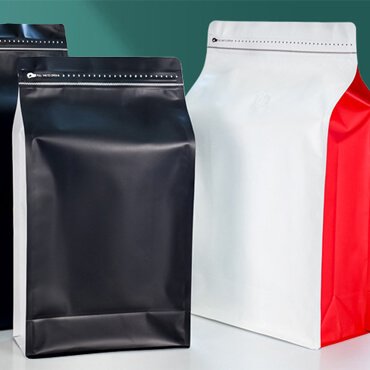
We follow the bag through the complete packing flow
We start at the filling station. The open mouth must present cleanly to the buyer's funnel, chute, or manual loading method. The gusset folds should open without forcing the operator to reshape every bag. The target fill should settle below the final closure zone, and the filled mouth should reach the seal bars without wrinkles caused by an over-tight pack. The buyer's actual equipment determines these checks, so we avoid promising that one depth works on every line.
We then review features and graphics. A one-way degassing valve, when specified for the project, needs a confirmed location that remains on the intended panel after the bag expands. Artwork that looks centered on a flat proof may appear closer to an edge on the filled pack. Side-panel text and registration-sensitive graphics also need the real fold and seal positions. We provide free artwork and typesetting service to help buyers coordinate these details.
Finally, we check distribution. The expanded depth affects the filled footprint, packs per row, carton choice, and how the bag faces inside the case. We ask the buyer for internal carton limits when those limits are fixed. We do not assume that maximizing pouch volume will minimize shipping space.
| Process stage | Gusset-depth question | Approval evidence |
|---|---|---|
| Filling | Does the mouth open and accept the product consistently? | Line or representative filling trial |
| Final sealing | Does the filled bag leave clean, flat closure film? | Sealed trial packs |
| Artwork | Do front and side graphics sit correctly after expansion? | Filled printed mock-up or approved proof |
| Features | Do the valve, zipper, and tear notch avoid folds and seals? | Dimensioned feature drawing |
| Cartoning | Does the filled footprint fit the planned case pattern? | Trial case pack or measured layout |
A printed pattern requires printing plates, so a plate fee may apply and is paid to the plate-making factory. We recommend locking the gusset and artwork layout before plate making. The same printing pattern normally does not need a new plate fee on a later reorder, but any layout change should be reviewed against the confirmed quotation.
What Should Buyers Test Before Approving Bulk Production?
A theoretical volume estimate cannot show every fold, seal, graphic, and carton interaction. A bulk order needs a physical approval that represents the intended use.
Buyers should fill, settle, close, inspect, and case-pack representative samples with the real coffee. We record the approved dimensions, sample type, artwork revision, equipment conditions, and acceptance decisions before bulk production.
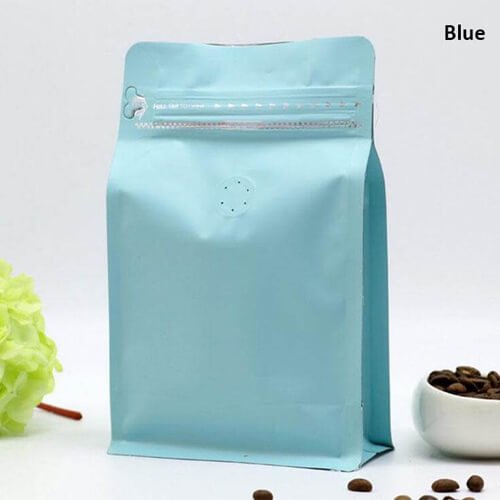
We turn the sample into a measurable decision
We provide free in-stock samples for an early size and construction comparison. An in-stock sample may not match the final dimensions, material structure, printing, or features, so we identify what it can and cannot prove. A separately produced custom sample may require a sample fee. For a later bulk order, we can return that fee or deduct it from the bulk-order price, subject to the confirmed quotation.
The buyer should load the target weight using the normal product and filling method. The buyer should allow the pack to settle as it would in routine handling, then make the intended final closure. The evaluation should check whether the gusset opens evenly, the fill stays below the seal zone, the pack achieves the desired shape, and the graphics remain in the expected positions. The buyer should also place several filled bags in the planned shipping case and examine fit without forcing or excessive unused space.
| Approval item | What the record should state |
|---|---|
| Product trial | Coffee type, target weight, batch condition, and filling method |
| Bag reference | Dimensions, expanded depth convention, construction, and revision |
| Closure check | Equipment used, closure position, and observed result |
| Appearance check | Filled shape, panel alignment, and feature positions |
| Case-pack check | Carton dimensions, pack orientation, and quantity per case |
| Final decision | Authorized sample or drawing, date, and change-control rule |
Our integrated production system covers raw-material production through finished products, and our production organization supports large orders and long-term supply. We still depend on a precise approved reference because stable output starts with stable specifications. Buyers can review our manufacturing process and send the sizing data through our quotation page.
Conclusion
We choose coffee-bag gusset depth from real fill volume, labeled dimensions, line compatibility, filled appearance, and a documented sample trial rather than weight alone.