


A holographic bag can impress on screen yet disappoint in real light, filled form, or bulk production unless buyers approve the right physical evidence.
Buyers should approve a holographic bag with a physical sample that matches the intended film, artwork, structure, closure, and product load. Review it under several lights and angles, test critical functions, and record the exact approved revision before bulk production.
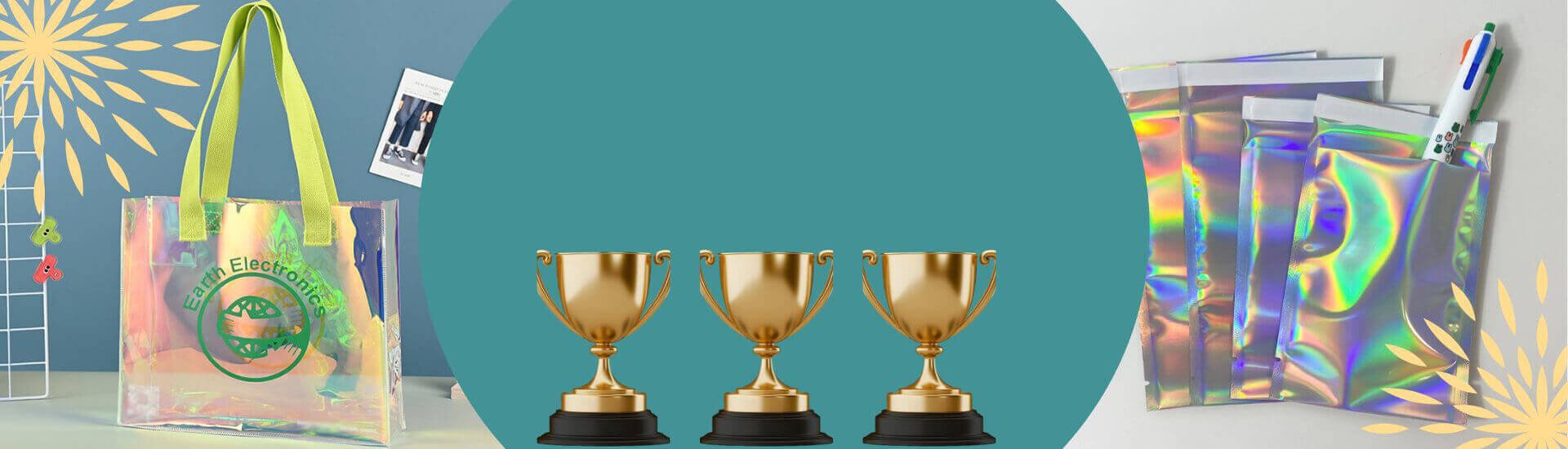
I use four approval stages to separate a convincing mockup from a production-ready packaging decision.
Which Type of Sample Should a Buyer Request?
Buyers can waste time and money when they expect one sample to answer every material, print, size, and function question.
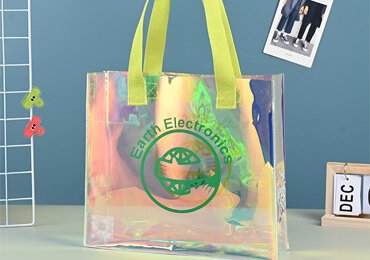
Use an in-stock sample to compare general material and bag style, an artwork proof to check layout, and a custom physical sample to approve the combined finish, print, dimensions, closure, and filled appearance.
Match the sample to the open decision
I first ask what the buyer still needs to learn. If the buyer is comparing the general look and feel of available holographic bags, an in-stock sample may be enough. We provide free in-stock samples, so this is a practical first filter. However, a stock bag does not prove how the buyer’s own artwork, dimensions, zipper, product, or selected holographic pattern will look together.
A digital artwork proof answers different questions. It can confirm spelling, logo position, dimensions on the dieline, information hierarchy, and which areas should show the holographic effect. It cannot reproduce the changing optical appearance of reflective film on a screen. I therefore treat a PDF proof as a layout approval, not as the final physical finish approval.
A separately produced custom sample combines more of the actual choices. It may require a sample fee. If the buyer later places the bulk order, we can return that fee or deduct it from the bulk-order price, subject to the confirmed quotation.
| Approval question | Useful evidence | What it cannot prove alone |
|---|---|---|
| Is the general holographic direction suitable? | In-stock sample or film reference | Custom artwork and exact structure |
| Is the layout correct? | Digital artwork proof | Real light shift, feel, and filled form |
| Does the pack work as intended? | Custom finished sample with product | Full-run consistency by itself |
| Can production begin? | Signed specification plus approved physical reference | Unwritten changes or later revisions |
Our holographic bags page shows the product category and common bag formats. The buyer should still identify which decisions the requested sample must close.
How Should Buyers Review the Holographic Effect and Artwork?
A single front-facing photograph can hide weak text contrast, distracting reflections, or an effect that changes sharply with the viewing environment.
Review the filled sample under diffuse office light, direct retail-style light, and the expected display angle. Tilt and rotate it, then confirm logo contrast, small-text readability, effect placement, pattern direction, and unprinted areas.
Use a repeatable visual review
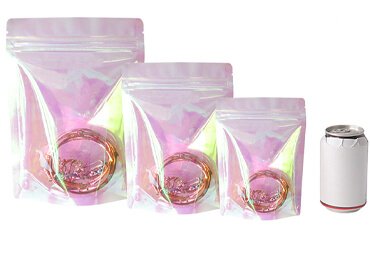
Holographic surfaces change as light and viewing angle change. That is the attraction, but it also means one photograph cannot represent every shelf condition. I ask the buyer to hold the sample upright, tilt it forward and back, rotate it left and right, and view it from normal shopping distance. The review should use the same sample for every comparison.
The buyer should then inspect the brand name, product name, variant color, small instructions, and any barcode or QR code. Reflective areas can compete with fine text. A clear result under one angle may become harder to read under another. If the design needs quiet areas behind important information, those areas should be identified in the artwork rather than left to assumption.
Compare against a named reference
Words such as “rainbow,” “laser,” “iridescent,” or “silver holographic” may not identify one universal pattern. I prefer a supplier code, physical film swatch, approved bag, or another named reference. The review record should also state the pattern direction and the side or panels where the effect appears.
The buyer should photograph the sample under the agreed conditions, but the physical reference should control when camera exposure or screen settings alter the appearance. If several SKUs share one brand system, I recommend placing the samples together. This makes it easier to see whether the logo size, information hierarchy, and holographic intensity feel consistent across the range.
What Functional Checks Should a Filled Sample Pass?
A beautiful empty pouch may become unstable, hard to close, or visually unbalanced after the real product changes its shape.
Fill the sample with the actual product or a weight-and-volume equivalent. Check usable capacity, standing or lying shape, closure access, top-seal space, opening, label position, barcode scanning, packing speed, and case fit.
Test the complete packing sequence
I ask buyers to reproduce the intended operation, not only inspect an empty bag. The packing team should load the product using the planned method, remove trapped air if that is part of the process, close the zipper when present, and apply any final top seal using the buyer’s actual equipment and validated settings. The sample should leave enough working space for the team to pack without forcing the product into the seal or closure area.
The filled bag should then be placed in its normal display position. A stand-up format should be evaluated on the intended shelf with the real load. A flat bag should be assessed in the bin, hook, carton, or shipping arrangement that the buyer expects. The buyer should check whether the product shifts behind important graphics or makes the front panel look uneven.
| Filled-sample check | Buyer question | Record |
|---|---|---|
| Capacity | Does the product fit without crowding the closure? | Product amount and filled dimensions |
| Opening and closure | Can staff and customers use the pack as intended? | Steps, observations, and approved configuration |
| Artwork position | Does the product distort or cover key information? | Filled front, back, and side photographs |
| Barcode or QR code | Can the actual device read it reliably? | Device, location, and result |
| Packing workflow | Can staff load and close it consistently? | Trial quantity and operator notes |
| Carton fit | Does the packed shape suit the planned case? | Count, orientation, and case dimensions |
These checks do not establish food contact, barrier performance, regulated use, or transport compliance. Buyers should define and verify those requirements separately with product-specific evidence.
What Should the Final Approval Record Include?
Verbal approval creates risk when artwork files, dimensions, finish references, or sample revisions change between sampling and production.
The approval record should identify the sample, artwork revision, dimensions, bag style, material specification, holographic reference and direction, print areas, closure, quantity, packing method, accepted changes, approver, and approval date.
Freeze one controlled production reference
I recommend giving every proof and sample a revision number. The buyer should mark the approved sample and retain one copy. We should retain or document the matching reference as well. If the buyer requests a change after approval, the team should issue a new revision instead of editing the old instructions informally.
The approval sheet should separate visual standards from functional requirements. Visual details include the holographic pattern, direction, effect areas, artwork file, print sides, colors, and acceptable reference. Functional details include finished size, gusset, zipper or other closure, tear notch when used, fill opening, top-seal allowance, and packing configuration. The parties should also agree on the inspection method and acceptance limits that apply to the order instead of assuming that “same as sample” answers every production question.
A printed design requires a printing plate, so a plate fee may apply. The fee is paid to the plate-making factory. When the same printing pattern is reused in a later order, a new plate fee is normally not needed. A changed layout, size, or print arrangement should be reviewed because it may affect the required setup.
Our guide to a custom flexible packaging RFQ helps buyers organize the broader quotation inputs. For holographic packaging, the approved physical reference and revision history are especially important because a static screen cannot show the full changing effect.
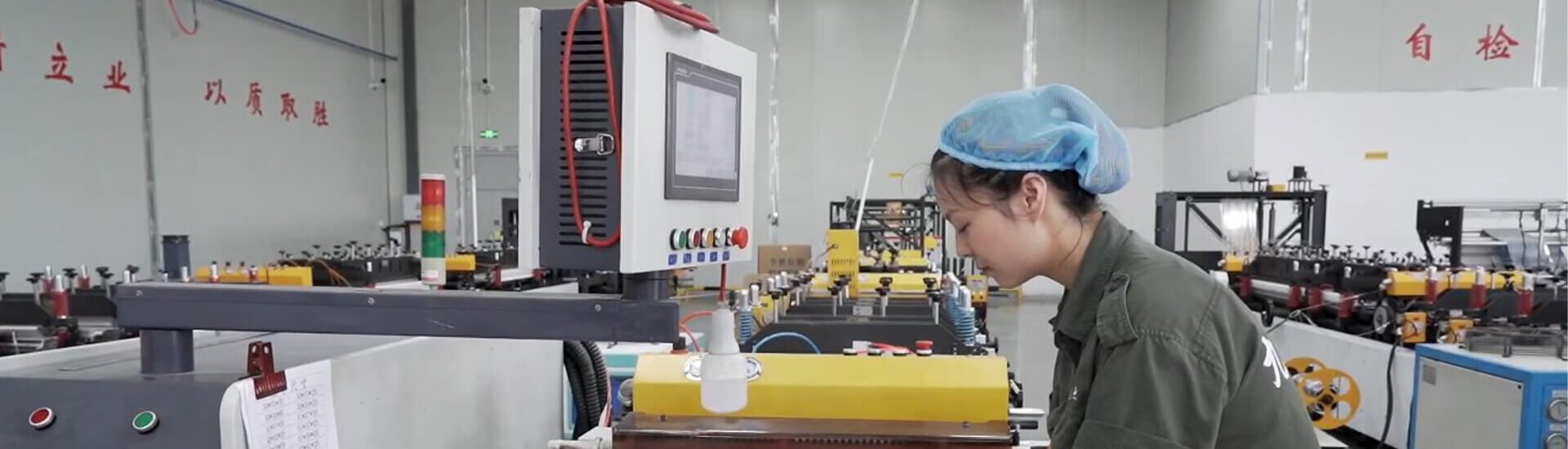
We use an integrated production system and experienced employees to support large orders and long-term supply. Clear approval records help our team follow one confirmed target and reduce avoidable misunderstandings during repeat production.
Conclusion
Approve holographic bags with the right physical sample, real lighting, filled-use tests, and one signed revision record before releasing bulk production.