


Two coffee bags can hold the same weight yet behave differently on shelves, filling lines, and inside cartons. I compare the whole packed system before choosing.
I choose a flat-bottom coffee bag when a stable base and multiple display panels support the retail plan. I choose a side-gusset bag when its folded format and existing packing method fit better. Buyers should confirm either choice with filled line, shelf, and carton trials.
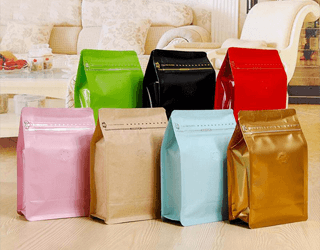
The right decision comes from measurable requirements, so I separate format, filling, closure, graphics, and distribution instead of relying on a style label.
How Do Flat-Bottom and Side-Gusset Coffee Bags Differ?
Similar front views can hide different bases, seams, folds, and usable panels, which can cause errors in drawings and equipment discussions.
A flat-bottom bag uses a defined base with front, back, side, and bottom panels. A side-gusset bag expands through folds along both sides and closes through its specified top and bottom construction. Buyers should compare finished drawings, not names alone.
Read the finished bag drawing
I ask a buyer to confirm the format using a drawing or physical reference because suppliers can use related names differently. A flat-bottom pouch usually forms a box-like filled shape with a separate base panel and vertical side panels. Its panel layout gives the designer several defined surfaces, but seams, folds, zipper components, and the valve still need reserved zones.
A side-gusset bag expands at the sides as coffee enters. The front and back remain the main communication surfaces, while the folded gussets change visibility between the empty and filled states. The bottom closure and top closing method must be identified because these details affect filling, standing behavior, and artwork orientation.
| Drawing feature | Flat-bottom format | Side-gusset format |
|---|---|---|
| Base | Defined bottom panel | Bottom closure matched to the bag design |
| Expansion | Side panels and base create the filled shape | Folded side gussets open with the product |
| Main graphics | Front, back, sides, and selected bottom use | Front, back, and visible gusset areas |
| Empty condition | Structure folds flat for delivery | Side folds lie inward before filling |
| Critical confirmation | Base dimensions and panel seams | Gusset depth, bottom style, and fold direction |
I do not assume that either bag holds more coffee from nominal width and height alone. Coffee density, gusset opening, seal allowances, valve position, zipper, and target headspace all change usable capacity. A filled sample gives a more dependable answer than a catalogue size comparison.
Which Format Better Fits the Retail and Brand Plan?
A striking empty sample can still lean after filling, hide important copy in a fold, or occupy the wrong shelf footprint.
Flat-bottom bags suit projects that need a defined upright base and several visible panels. Side-gusset bags suit projects that value a classic coffee profile or a narrower folded presentation. The buyer should test actual fill, shelf dimensions, and display orientation.
Measure the filled shelf unit
I ask for the shelf height, available facing width, depth, display tray, hook requirement, and the number of facings planned. A flat-bottom bag can create a broad, structured shelf presence, but a base only works when its dimensions and fill distribution support it. A side-gusset bag may produce a familiar upright coffee shape after filling, yet its final footprint depends on how fully the folds open and how the beans settle.
The artwork must follow the final shape. On a flat-bottom pouch, side panels can carry flavor, origin, preparation, or brand information, but the designer must respect vertical seams and folds. On a side-gusset bag, a graphic placed deep inside a fold may be hidden when the bag faces forward. The valve must also remain away from critical text, seals, folds, zipper parts, and machine gripping areas.
| Retail question | What I request | Approval evidence |
|---|---|---|
| Must the bag stand unsupported? | Shelf surface and filled footprint | Filled samples remain presented as intended |
| Which panel faces the shopper? | Planogram or display sketch | Main message stays visible |
| How many variants share the shelf? | SKU list and color system | Format supports clear variant recognition |
| Will a tray support the pack? | Tray dimensions and loading direction | Bags fit without forced compression |
| Will users reclose the bag? | Expected opening and storage behavior | Closure remains accessible after opening |
I recommend photographing both candidate formats in the intended display. This simple comparison reveals proportion, glare, wrinkles, valve visibility, and copy placement that a flat digital rendering cannot show.
How Do Filling, Closing, and Reclosure Affect the Choice?
A bag format cannot succeed if the roaster's line cannot open, hold, fill, degas, close, and discharge it consistently.
Buyers should match the bag to manual or automatic filling, top-opening width, gripper zones, target headspace, valve location, final seal, and reclosure method. The equipment maker should confirm compatibility before packaging is ordered.
Map the packing sequence
I ask the buyer to describe every step from empty bag loading to finished carton packing. A pre-made bag may need to feed from a magazine, open by suction, hang from grippers, receive coffee, settle, clear product from the seal area, and pass through final closing. Manual operations have different constraints, but the operator still needs enough access and repeatable positioning.
The top zone is especially important. A zipper, tin tie, or fold-and-seal closure changes the required headspace and opening method. The valve location also interacts with the filled coffee level, closure, artwork, and machinery. Buyers who have not chosen the closure should not freeze the final bag height too early.
| Packing input | Detail to provide | Decision affected |
|---|---|---|
| Filling method | Manual or machine model | Bag presentation and gripping |
| Target fill | Coffee type, weight, and bulk behavior | Capacity and headspace |
| Closing method | Heat seal, tin tie, fold, or other approved method | Top construction and final bag height |
| Reclosure | Zipper style and user access | Opening width and component location |
| Degassing valve | Required location and equipment constraints | Panel layout and filled coffee level |
| Output route | Conveyor and case-packing orientation | Discharge and carton fit |
Buyers can review our custom coffee bags page to identify relevant format examples. I still need the equipment data and intended pack sequence before recommending a custom structure. XINYUAN provides free artwork and typesetting service, which helps connect machine zones with the final graphic layout.
What Should Buyers Test Before Bulk Approval?
An empty pouch proves little about standing shape, fill accuracy, valve clearance, closure access, or the way bags press together during shipment.
Buyers should test representative filled bags on the intended line and in the final carton. They should document feeding, filling, sealing, reclosure, valve position, standing behavior, dimensions, artwork, pack count, and buyer-defined quality checks.
Run the same trial for both formats
I recommend comparing the candidates with the same coffee, target weight, operator, equipment, storage period, display, and carton plan. Each sample should carry a drawing revision or sample code. Otherwise, teams may combine feedback from different sizes, closures, or materials and reach the wrong conclusion.
The production trial should record loading, opening, fill consistency, product near the seal, cycle settings, stoppages, and rejects. The filled-pack review should cover dimensions, base shape, leaning, panel distortion, valve relationship to the coffee level, tear opening, and zipper or tin-tie use. The carton review should confirm orientation, count, headspace, rubbing, and the appearance after the buyer's normal handling test.
| Approval area | Evidence to record | Release question |
|---|---|---|
| Line performance | Machine settings, rate, and interruptions | Can production repeat the pack? |
| Filled appearance | Photos and measured dimensions | Does the format match the shelf plan? |
| Closure and valve | Position, access, and buyer-selected tests | Do features work in the completed bag? |
| Carton | Orientation, count, and condition after handling | Does the distribution unit remain acceptable? |
| Specification | Approved drawing, construction, and criteria | Can purchasing reorder the same requirement? |
XINYUAN provides free in-stock samples when a relevant option is available. A separately made custom sample may require a fee. Subject to the confirmed quotation, I can return that fee or deduct it from a later bulk-order price. A printed design may require a plate fee paid to the plate-making factory; the same printing pattern normally does not require a new plate fee on a later order. I clarify these stages so the buyer can compare structures before committing to final printing.
Conclusion
I choose flat-bottom or side-gusset coffee bags by matching shelf shape, artwork, filling, closure, valve, and carton needs, then confirming them through equal filled trials.